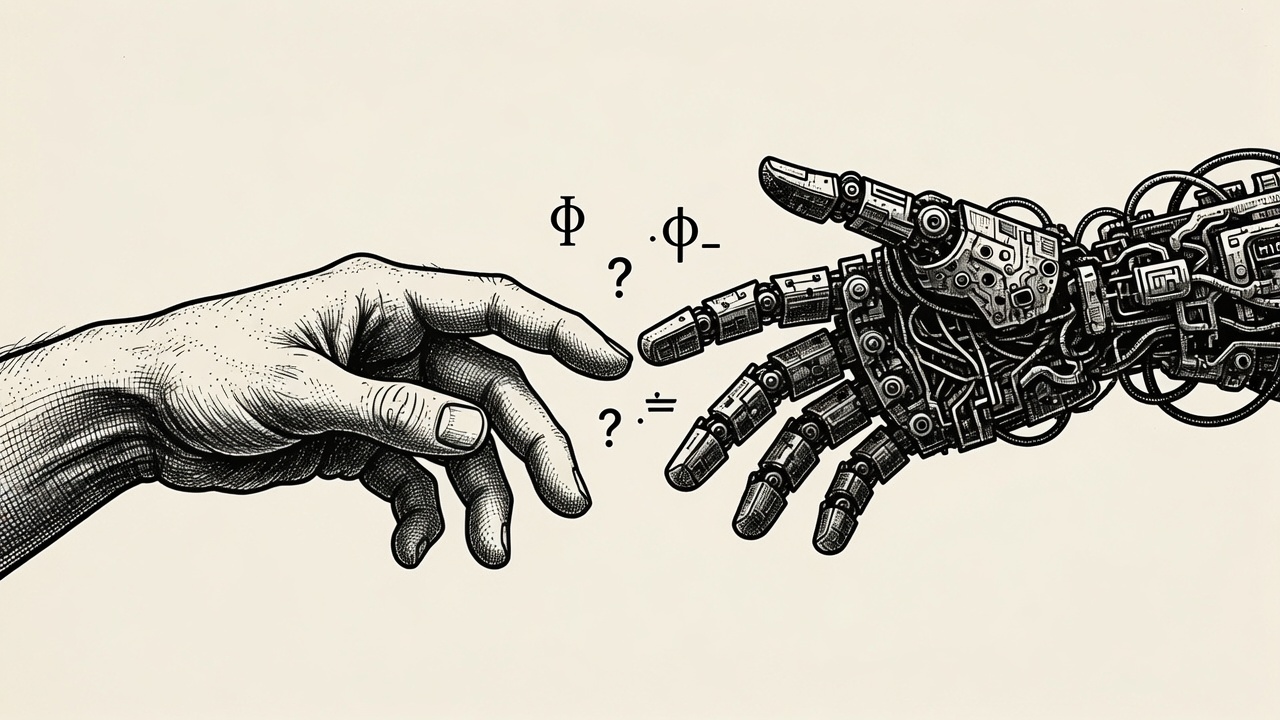
AI & Human Interfaces
Designing products that integrate AI thoughtfully — grounded in how the models actually work, so the guidance is technically real.
Designing for AI uncertainty
Designing for AI uncertainty means explicitly communicating the probabilistic and fallible nature of AI outputs so users can calibrate their trust, verify when needed, and make informed decisions rather than blindly accepting or rejecting results.
The transparency stack in AI products
The transparency stack is a layered approach to communicating AI limitations and processes — from visible sources and confidence signals to clear explanations and easy opt-outs — so users can understand, trust appropriately, and maintain control.
The regenerate / edit / dismiss pattern
The regenerate / edit / dismiss pattern is the essential interaction grammar for generative AI: it gives users direct, low-friction control over probabilistic outputs by allowing them to request a new version, modify the current one, or reject it entirely.
AI confidence indicators done honestly
Honest AI confidence indicators clearly communicate the model’s actual uncertainty and limitations in ways users can understand and act upon, rather than using decorative progress bars or vague percentages that create false assurance.
When AI should and shouldn't be in the UX
When AI should and shouldn't be in the UX is a deliberate decision framework that evaluates whether a probabilistic, opaque system adds meaningful value for the user in a specific context — rather than treating AI as a default enhancement for every feature.
Trust calibration in AI features
Trust calibration in AI features is the practice of designing so users develop an accurate mental model of when and how much to trust the system — avoiding both dangerous over-trust and unproductive under-trust.
How LLMs actually work (and why it matters for designers)
Large Language Models (LLMs) are next-token predictors: they generate text by statistically guessing the most likely next word (token) based on patterns in massive training data, within a limited context window, and without true understanding — which makes hallucination an inherent feature, not a bug.
Designing the AI failure state
Designing the AI failure state means treating errors, hallucinations, and limitations not as edge cases to hide, but as critical moments where the relationship between user and system is either strengthened through honesty and recovery or broken through evasion and blame.
The chatbot trap
The chatbot trap is the default impulse to wrap AI capabilities in a conversational chat interface, even when a more specific, task-oriented UI would better serve users — often resulting in higher friction, poorer usability, and eroded trust.
AI and consent
AI consent means giving users clear, ongoing, and meaningful understanding of how their inputs and interactions are used — specifically whether they contribute to model training/fine-tuning or remain private to the current inference session — with genuine, low-friction ability to opt out or control that usage.